Flooring Installation During Whole-Home Rehabs in PhiladelphiaWhen walking through a newly renovated Philadelphia row-home, buyers immediately notice the flooring. A sweeping expanse of wide-plank white oak or seamless luxury vinyl plank (LVP) sets the tone for the entire house, making spaces feel larger and more cohesive.However, beneath that beautiful finished surface lies the true challenge of historic home remodeling: the subfloor. Homes built in Philadelphia a century ago were constructed with solid timber joists that have settled, dried out, and deflected over decades.
It is exceedingly rare to find a truly level floor in an unrenovated row-home.If you attempt to lay rigid modern flooring over a wavy, sloping subfloor, the planks will buckle, the joints will snap, and the floor will fail prematurely. At PHS General Contractor Philadelphia, we emphasize that a high-quality flooring installation is 80% preparation and 20% finishing. Here is how we handle flooring during major interior renovations.Diagnosing Subfloor and Deflection IssuesBefore selecting a flooring material, the underlying structure must be evaluated.
PHS General Contractor Philadelphia — official website.
Philadelphia L&I: Building Permits.
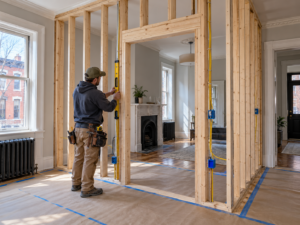
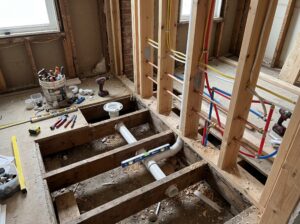
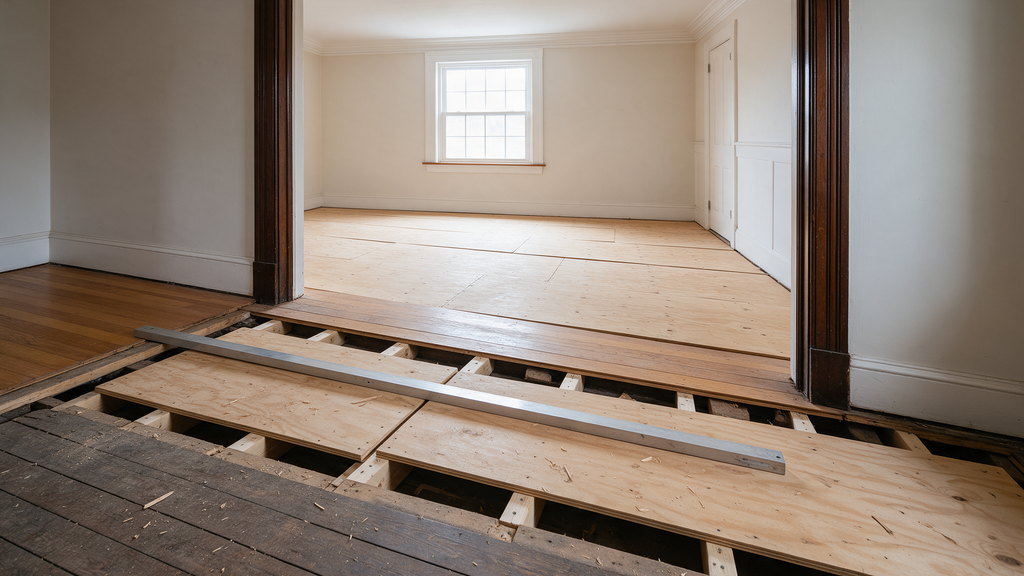
When the old carpet, linoleum, or damaged hardwood is ripped out during the demolition phase of a whole-home rehab, the contractor must assess the condition of the wooden floor joists.Structural Deflection: If the floor feels “bouncy” or spongy when you walk on it, the joists may be over-spanned, undersized, or suffering from rot where they meet the masonry party walls. This is a structural issue that must be addressed by reinforcing the framing before any cosmetic work begins.Squeaks and Loose Subfloors: Historic rowhomes often have diagonal pine subfloors.
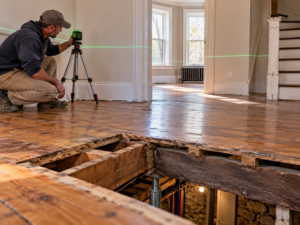
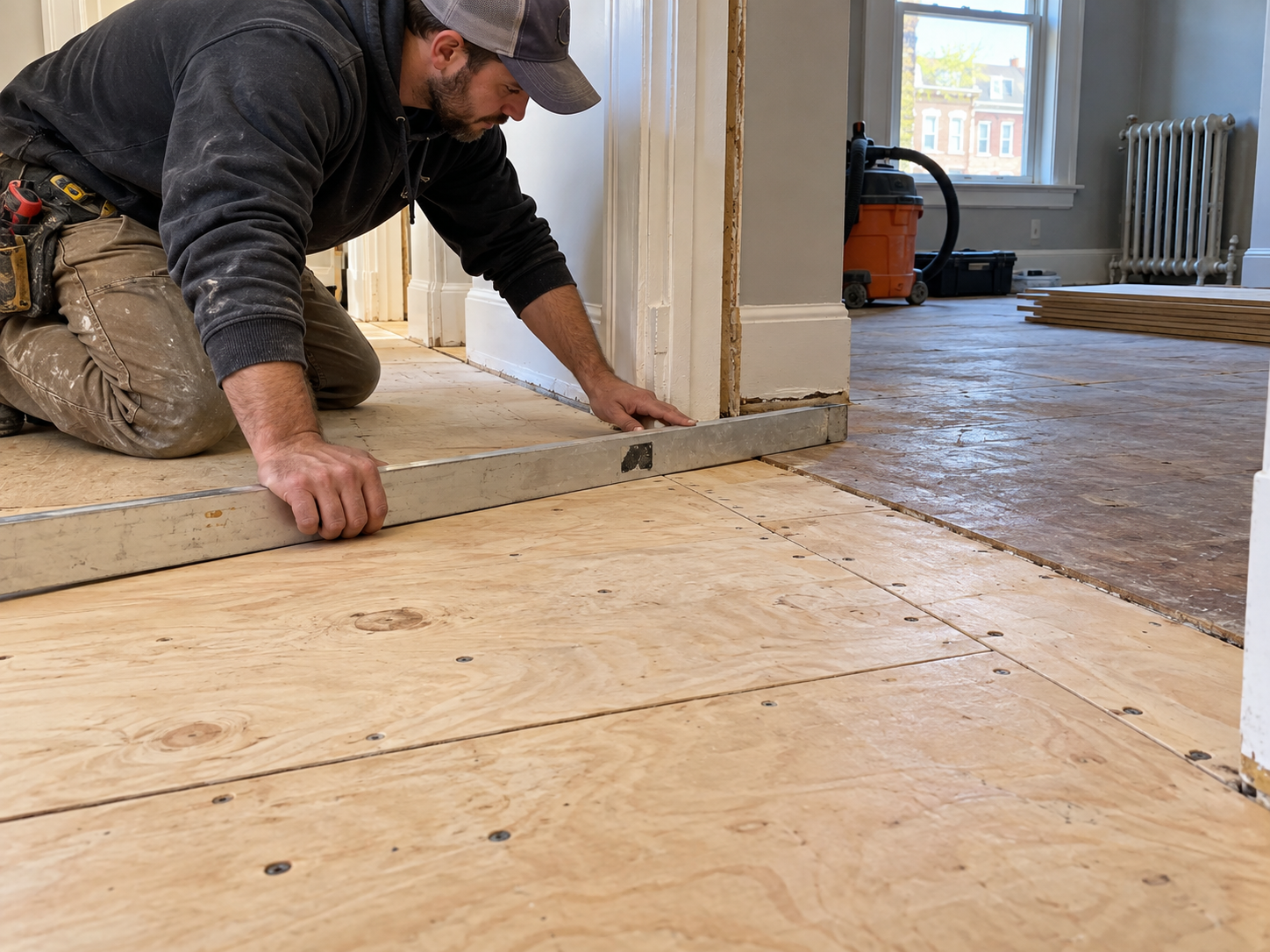
Over decades, the nails pull loose from the joists, causing intense squeaking. The contractor must drive hundreds of new floor screws through the subfloor into the joists to securely anchor the wood and silence the squeaks.The Marble Test: Sloping floors are common as historic foundations settle. A laser level (or a simple rolling marble) will reveal the high and low spots across the room.The Art of Subfloor LevelingModern flooring materials, particularly LVP and large-format tile, have strict manufacturing tolerances.
If the subfloor deviates by more than 3/16 of an inch over a 10-foot span, the locking mechanisms on the planks will fail, or the tiles will crack.There are two primary methods for leveling a historic floor during a gut rehab:1. Sistering Floor JoistsIf the entire floor system is sagging severely, the most robust solution is to “sister” the joists. This involves removing the original subfloor entirely to expose the joists.
The contractor then takes perfectly straight, new dimensional lumber (like 2x10s) and bolts them directly alongside the old, sagging joists, using a laser level to ensure the top edges of the new wood create a perfectly flat plane. A new, thick plywood subfloor is then glued and screwed to the level structure. This method is highly invasive but permanent.2. Self-Leveling Underlayment (SLU)If the subfloor is structurally sound but simply uneven or wavy, self-leveling concrete underlayment is the preferred solution. The contractor meticulously seals every crack and knot-hole in the wooden subfloor to prevent leaks.
Then, they pour a highly fluid cementitious mixture across the room. Gravity pulls the liquid into the low spots, and it cures rapidly into a smooth, rock-hard, perfectly flat surface ready for flooring installation.Choosing the Right Flooring for Philadelphia HomesThe material you choose should align with your budget, lifestyle, and the specific room environment.Hardwood Restoration: If the home has original 1920s pine or oak flooring hidden under carpets, restoration is often the most valuable choice.
Professional sanding, patching (lacing in new wood where walls were removed), and refinishing with a durable polyurethane can bring historic character back to life.Engineered Hardwood: Solid hardwood is susceptible to expansion and contraction with humidity changes. Engineered hardwood features a real wood veneer glued to a stable plywood core. It provides the authentic look of solid wood but is far more stable in environments with fluctuating humidity, making it ideal for Philadelphia rowhomes.Luxury Vinyl Plank (LVP): LVP has revolutionized the remodeling industry.
It is 100% waterproof, incredibly scratch-resistant (ideal for pets and rentals), and mimics the look of wood flawlessly. Because it is a floating floor, it requires a meticulously leveled subfloor to prevent the planks from separating under foot traffic.Installation Timing in the Remodeling SequenceWhen should the flooring be installed during a multi-room renovation? Timing is critical to prevent damage.If you install the floors too early, the plumbers, electricians, and drywallers will inevitably scratch or dent them with ladders, dropped tools, and heavy boots.
If you install them too late, you hold up the installation of baseboards, doors, and kitchen cabinets.The professional sequence is:Complete all rough mechanicals, drywall, and plastering.Spray the ceilings and apply the first coat of paint to the walls.Install the flooring.Immediately cover the brand-new floors with heavy-duty protective paper (such as Ram Board), taping the seams securely.Install the kitchen cabinets, interior doors, and baseboards on top of the protected floors.Complete final plumbing trim-outs and the final coat of paint.Remove the floor protection just before the final cleaning.
FAQs About Flooring Installation: Should flooring run parallel or perpendicular to the floor joist
s?If you are nailing down solid hardwood directly over a standard plywood subfloor, the planks should be installed perpendicular to the floor joists to maximize structural stability and prevent the floor from sagging between the joists.Can I put new flooring over old linoleum or tile?Sometimes. LVP can often be floated directly over old, tightly bonded linoleum or flat tile, provided the existing floor is completely level and firmly attached. However, doing so raises the height of the floor, which may require cutting the bottoms of doors and transitioning awkwardly to adjacent rooms.
It is usually better to remove the old flooring.Does installing new floors require a building permit?Replacing flooring is generally considered a cosmetic finish and does not require a permit from Philadelphia L&I, provided you are not altering the structural floor joists beneath it.Do not compromise your interior renovation with a failing subfloor. Trust the experts at PHS General Contractor Philadelphia to prepare your home properly and install flawless, lasting flooring.