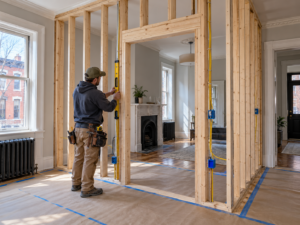
Noticeable floor sloping, sagging subfloors, or unexpected dips across upper hallways are common characteristics in historic 19th- and early 20th-century brick row-homes across Fair-mount, South Philadelphia, Northern Liberties, Fishtown, and West Philadelphia. Before investing in custom kitchen cabinetry, hardwood flooring, or bathroom tile, property owners must determine whether floor unevenness represents historic, stabilized building settlement or active, ongoing structural deterioration that requires immediate structural leveling.
Attempting to level a severely sloping floor by spreading thick self-leveling underlayment compound over structurally compromised wooden joists adds excessive dead weight to an unstable floor system, accelerating framing failure.
1. Common Causes of Floor Sloping in Urban Row-homes
A comprehensive structural floor inspection evaluates four distinct structural failure mechanisms typical of historic brick masonry construction:
Joist End Rot inside Masonry Pockets: Historic row-home floor joists rest inside pockets carved directly into shared brick party walls. Over a century of exterior brick moisture absorption causes joist ends to rot inside masonry pockets, dropping the edges of the floor system along party walls.
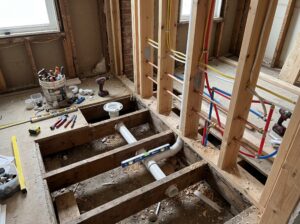
Past Unengineered Renovations: Prior owners or unqualified workers frequently cut or removed structural joists, staircase headers, or interior load-bearing brick arches to install plumbing or open up floor plans, transferring structural loads onto non-bearing partition walls.
Long-Term Timber Creep & Deflection: Undersized 2×8 or 2×10 joists spanning wide rooms gradually bend (deflect) over a century under heavy furniture loads, creating a characteristic bowl-shaped depression in the center of the room.
Cellar Pier & Foundation Settlement: Moisture changes in cellar dirt floors or crumbling brick masonry piers cause central support posts to settle, dropping the center beam of the home.
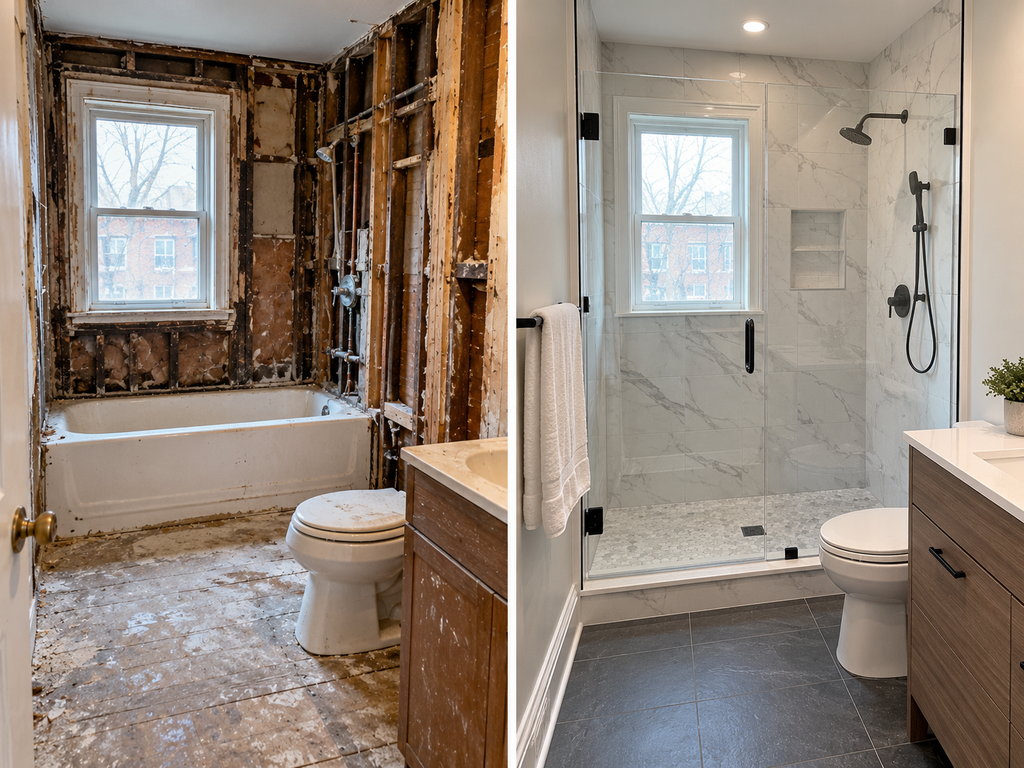
2. Structural Inspection Techniques and Leveling Methodologies
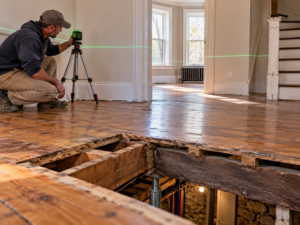
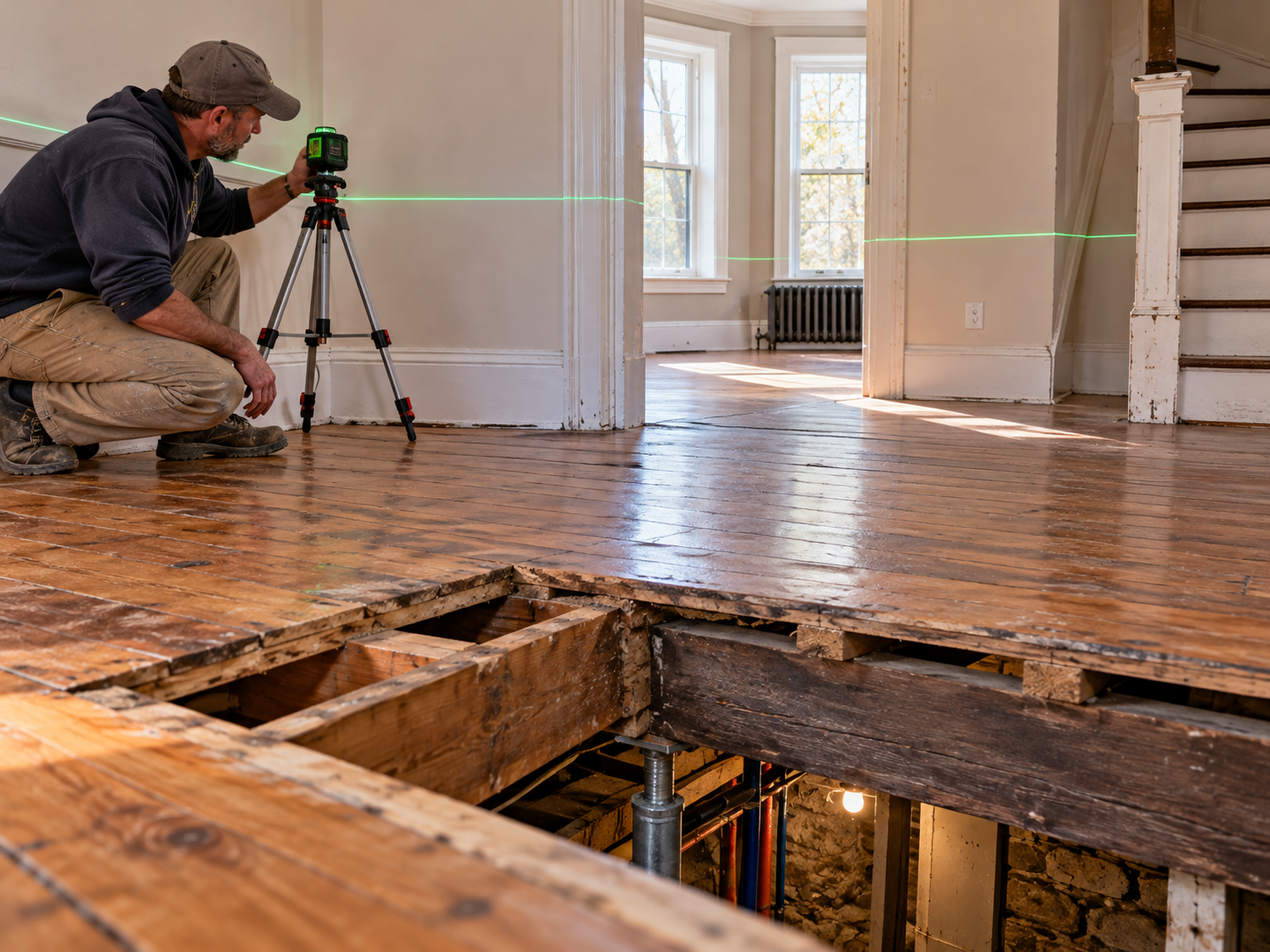
During an initial structural evaluation, a general contractor utilizes laser levels, moisture meters, and selective opening to determine structural integrity:
Floor Leveling Methodologies:
Sistering Joists: Bolting new, dimensional lumber or engineered LVL (Laminated Veneer Lumber) beams directly alongside existing deflected joists using structural lag screws and construction adhesive, restoring a level top surface.
Masonry Pocket Repair: Supporting floor loads with temporary shoring walls, cutting back rotted joist ends, installing structural steel joist hangers, and repointing brick masonry pockets.
Cellar Beam Jacking: Installing adjustable steel Teleposts over newly poured concrete footings in the cellar, gradually raising central girders over weeks to level upper floor systems.
3. Permitting and Engineering Standards in Philadelphia
Sistering structural floor joists, installing steel support beams, or modifying load-bearing masonry walls in Philadelphia requires structural engineering calculations and formal municipal trade permits. Check official guidance on Philadelphia structural repair permits before beginning floor leveling work.
Stabilizing structural framing creates a solid, level foundation for all subsequent interior remodeling finishes. Explore our complete general contracting services to schedule a structural site evaluation with PHS General Contractor Philadelphia.