Many homes in Philadelphia, from Germantown twins to Mount Airy stone houses and South Philadelphia row-homes, still have their original plaster walls. Traditional plaster over wood or metal lath is dense, durable, and sound-dampening. After 80 to 120 years, though, it often shows its age: spider-web cracks, bulging sections, and ceilings that sag when pressed.
Homeowners are often told the only solution is to tear everything out and hang drywall. Sometimes that is the right call, but in many cases plaster can be stabilized and repaired for less cost, less mess, and better preservation of the home’s character.
1. Understanding How Plaster Fails
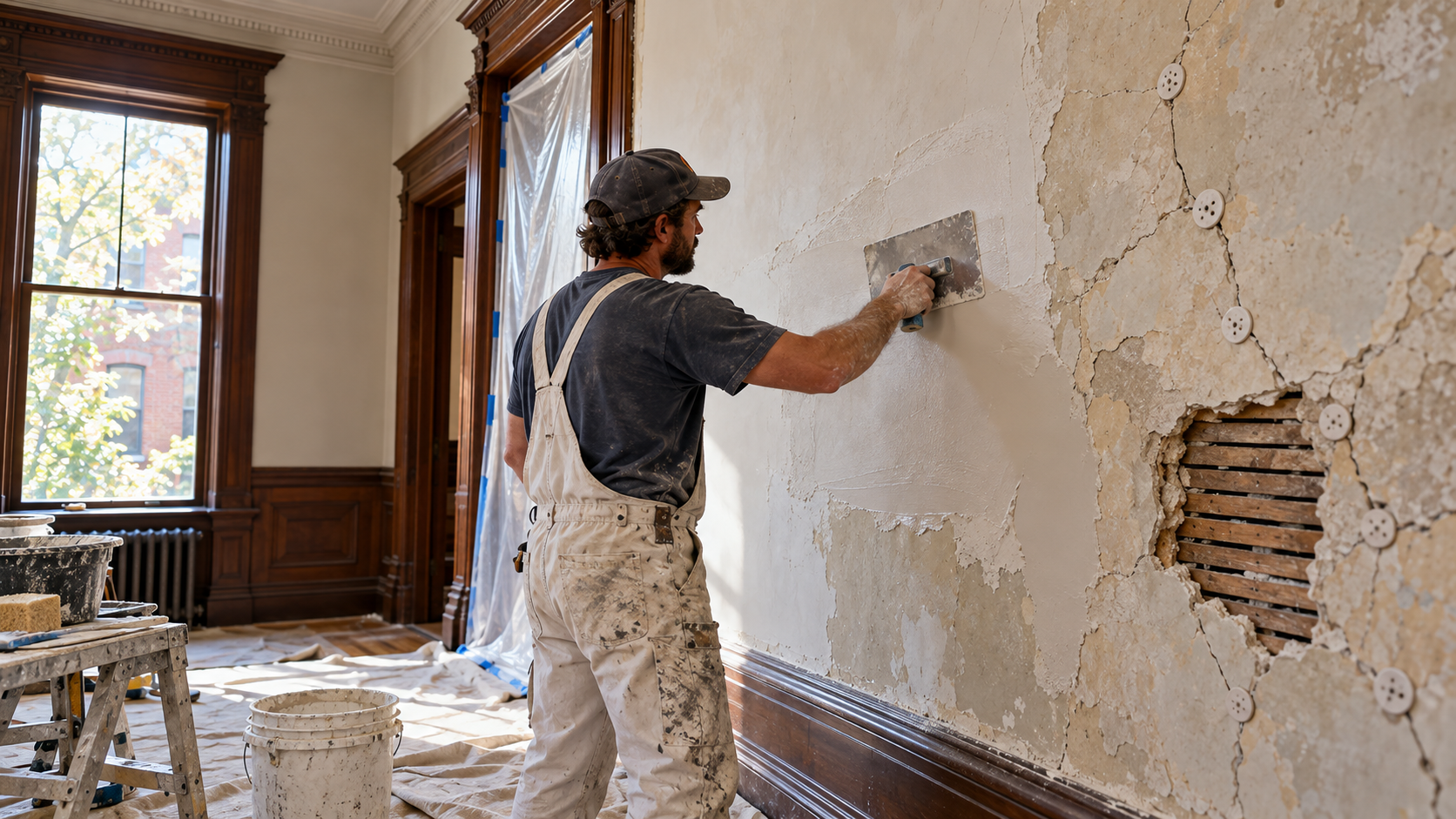
- Lost Keys: Plaster grips wood lath through “keys” that push between the lath strips. When keys break, the plaster separates from the lath and begins to bulge.
- Settlement and Movement: Structural movement, door slams, and seasonal expansion create diagonal cracks at door and window corners.
- Water Damage: Roof, plumbing, or window leaks soften plaster and cause crumbling and staining.
- Prior Repairs: Patches made with incompatible materials can crack along their edges.
2. Repair Options
Plaster Assessment Checklist:
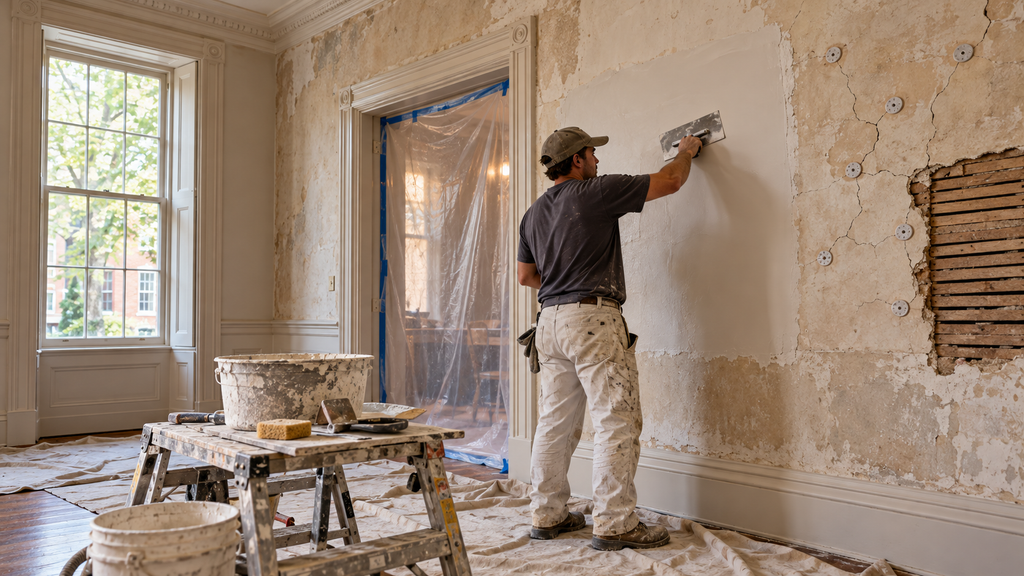
- Crack Repair: Hairline and minor cracks can be widened slightly, reinforced with mesh tape, and finished with setting-type compound.
- Reattachment: Loose but intact plaster can be reattached to the lath using plaster washers and screws or adhesive injection systems.
- Skim Coating: A thin coat of plaster or joint compound over the entire wall creates a smooth, uniform finish over many small cracks.
- Partial Replacement: Severely damaged sections can be removed and filled with drywall shimmed to match the plaster thickness, then blended in.
- Full Replacement: When plaster is widely detached, water damaged, or the walls are being opened for new wiring and plumbing, removal and new drywall may be most practical.
3. Safety Testing Before Demolition
Plaster and paint in older Philadelphia homes can contain lead, and some textured finishes and joint compounds from past decades may contain asbestos. Testing before demolition or sanding protects occupants and determines the correct containment and disposal procedures. Plaster removal also creates heavy dust and debris, so containment and protection of floors and HVAC returns are essential.
4. Coordinating with Other Renovation Work
If the walls will be opened for electrical upgrades, insulation, or plumbing, it is often more efficient to plan wall replacement alongside that work. Projects that include structural, electrical, or plumbing changes may require permits, so review Philadelphia building and repair permit requirements during planning.
The right plaster repair strategy balances cost, durability, and the character of your home. Explore our general contracting services to schedule a wall and ceiling assessment with PHS General Contractor Philadelphia.