
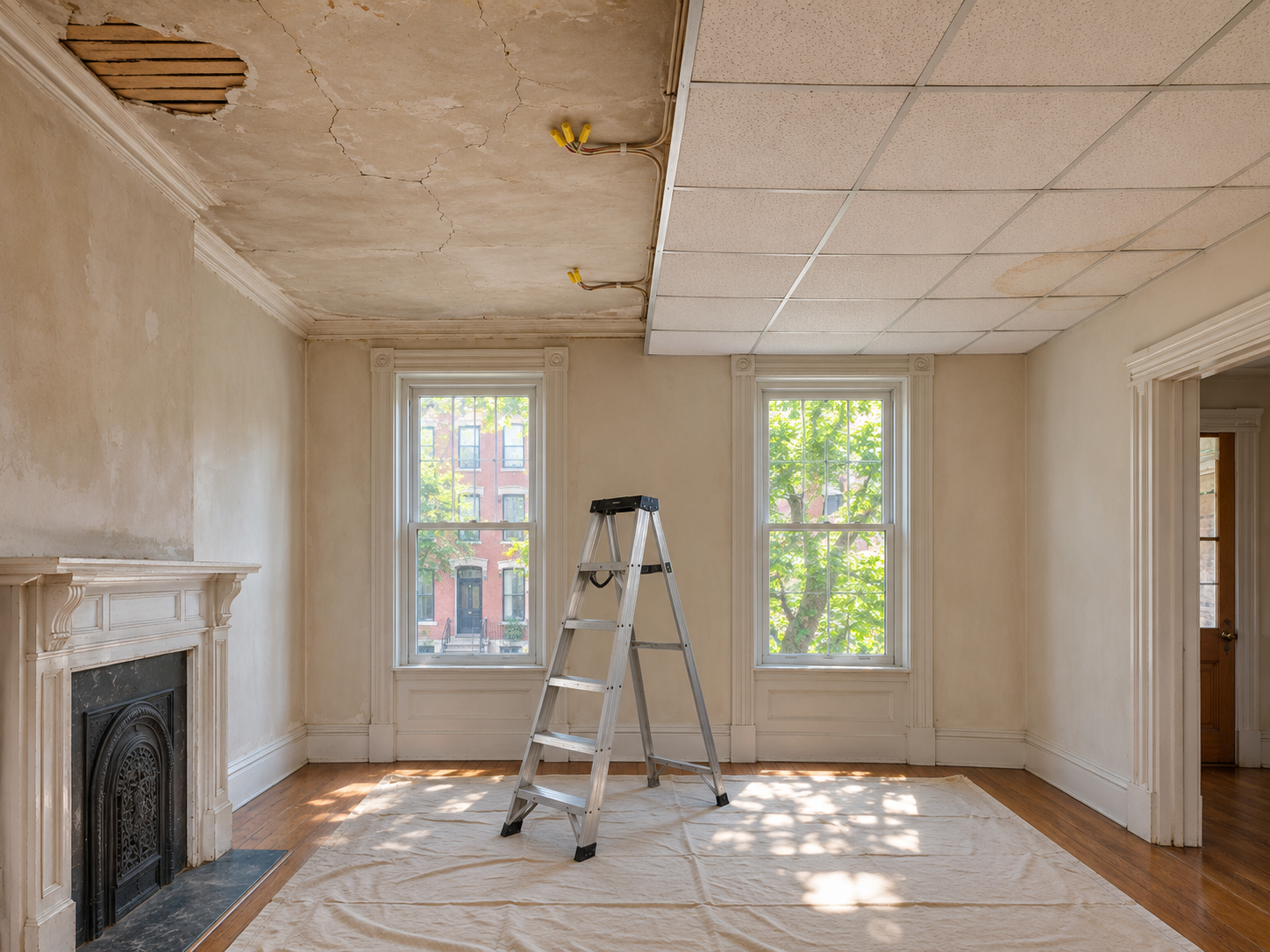
Drop ceilings, also called suspended or acoustic ceilings, are everywhere in older Philadelphia homes. They were popular for decades as a quick way to cover cracked plaster, hide wiring or pipes, or finish a basement. Many rowhomes and twins still have them in kitchens, living rooms, upstairs bedrooms and basements.
Today, many homeowners want them gone. Drop ceilings lower the room height, sag or stain over time and can make a space feel dated. Replacing one can open up a room and make it feel finished. But what is above that grid is often a surprise, and some older ceiling tiles call for extra care before anyone takes them down.
This guide explains what you may find above a drop ceiling, how to approach possible asbestos in Philadelphia, and the options for a new ceiling.
What Is Often Hidden Above a Drop Ceiling
In older homes, the space above a drop ceiling may hold:
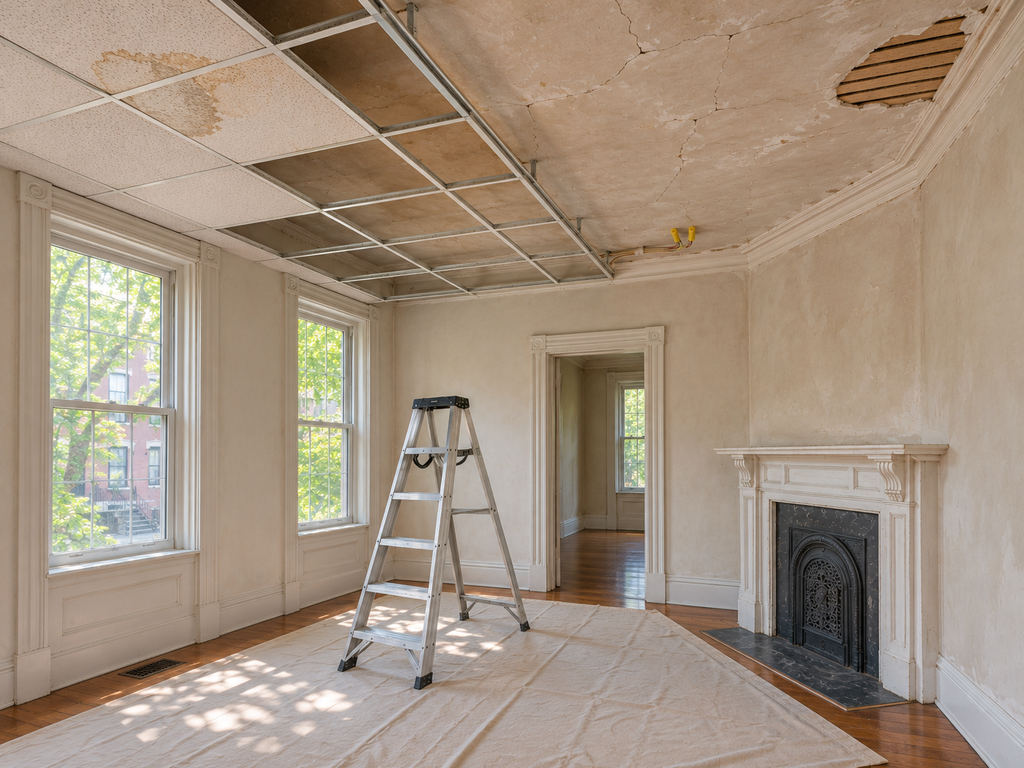
- Original plaster ceilings, sometimes cracked, sagging or partly fallen.
- Old wiring, including abandoned or spliced circuits.
- Plumbing and drain lines, sometimes with old leaks.
- Ductwork added after the house was built.
- Water damage from past roof or plumbing leaks.
- Exposed joists where plaster was removed years ago.
- Older ceiling tiles or materials that may contain asbestos.
Because of this, a good contractor will inspect above the ceiling before giving a final plan.
Asbestos: Test Before Removal
Some older ceiling tiles, plaster textures and other building materials may contain asbestos. You cannot tell by looking at them. If your home is older and the tiles or materials above the grid are original, testing by a qualified professional before removal is the safe approach.
In Philadelphia, asbestos work is regulated locally. The City of Philadelphia’s asbestos project permit page explains that property owners, business owners and asbestos abatement professionals in Philadelphia must obey these rules and regulations. The page sets out two thresholds:
- For less than 40 linear feet or 80 square feet of asbestos, you must submit an asbestos abatement and demolition/renovation notification form at least 24 hours prior to performing encapsulation or removal.
- For greater than or equal to 40 linear feet or 80 square feet of asbestos, you must apply for and receive an asbestos abatement permit before you begin encapsulation or removal.
The page also states that you must be a licensed asbestos abatement contractor to receive the permit, and that you will also need to hire an independent certified Asbestos Project Inspector (API).
For homeowners, the practical takeaway is simple: if testing finds asbestos, removal should be handled by a licensed abatement contractor under the City’s rules before the ceiling renovation continues.
Options for the New Ceiling
Once the drop ceiling is down and any hazards are handled, there are several paths:
New drywall ceiling. The most common option. Drywall is installed directly to the joists or over furring strips, then taped, finished and painted. It gives a smooth, clean look.
Repairing the original plaster. If the plaster is mostly sound, it can sometimes be repaired, stabilized and skim coated. This keeps the original ceiling height and character.
Drywall over existing plaster. Where plaster is cracked but stable, new drywall can sometimes be installed over it, fastened to the framing.
A new suspended ceiling. In basements or areas where access to pipes and wiring matters, a modern suspended ceiling may still be the practical choice.
Exposed joists. In some basements or lofts, leaving joists exposed and painted is an option, though it affects sound and appearance.
Things to Plan Before the New Ceiling Goes Up
- Electrical updates. It is the right time to replace old wiring, add recessed lights or ceiling fans and correct unsafe connections. Electrical work needs a licensed electrician and, where required, permits.
- Plumbing repairs. Fix any leaks or old lines above the ceiling before it closes.
- Insulation and sound. Between floors, insulation can reduce sound transfer.
- Height. Removing a drop ceiling may add several inches of height. Plan new lighting and trim around the new height.
- Access panels. If there are valves or junction boxes above the ceiling, plan access panels.
- Fire separations. In some areas, such as between a garage and living space or in multi-unit buildings, ceiling materials may need specific fire ratings.
Do You Need a Permit?
Simply replacing ceiling finishes may not need a building permit in every case, but related work often does. Electrical changes, structural repairs, plumbing work and asbestos removal each have their own rules. Your contractor should confirm with the City what applies to your project.
Basement Drop Ceilings: A Special Case
Basements are the one place where drop ceilings still make sense for many homes. In Philadelphia rowhomes, the basement ceiling often carries the main water line, drain lines, gas piping, ductwork and wiring. If any of those need service, a suspended ceiling allows access without cutting drywall.
If you are replacing an old basement drop ceiling, options include:
- A new suspended ceiling with modern, moisture-resistant tiles.
- Drywall with access panels at valves, cleanouts and junction boxes.
- Painted open joists, which keep full height and easy access.
The right choice depends on how you use the basement, how much access you need, and the available height.
What a Good Replacement Project Looks Like
- Inspection above the grid with a few tiles removed.
- Testing of tiles, plaster or other suspect materials, when the home is older.
- Abatement, if needed, by a licensed contractor under City rules.
- Removal of the grid and tiles.
- Repairs to framing, plaster, wiring or plumbing found above.
- Installation of the new ceiling.
- Finishing, painting, trim and lighting.
- Final walkthrough.
Questions to Ask Your Contractor
- Will you inspect above the ceiling before giving a final price?
- How will testing for asbestos be handled?
- What happens if you find damaged plaster, old wiring or leaks?
- Will the new ceiling be drywall, repaired plaster or something else?
- How will lighting and fixtures be updated?
Frequently Asked Questions
Should I replace my drop ceiling with drywall? In most living spaces, drywall gives a cleaner look and can add height. In basements, a suspended ceiling may still make sense for access.
Can old ceiling tiles contain asbestos? Some older ceiling tiles and building materials can. Testing by a qualified professional is the only way to know.
Do I need a permit to remove a drop ceiling? It depends on the scope. If asbestos is found, Philadelphia’s asbestos notification or permit rules apply. Electrical and other work may need separate permits.
What if the plaster above is damaged? It can be repaired, covered with drywall or removed and replaced. Your contractor will recommend the best option after inspection.
Raise the Ceiling the Right Way
Removing an old drop ceiling can transform a room, as long as what is above it is handled properly. PHS General Contractor Philadelphia inspects the space, coordinates testing and licensed trades when needed, and installs a finished ceiling that fits your home. Learn more about our general contracting services in Philadelphia and request an estimate.