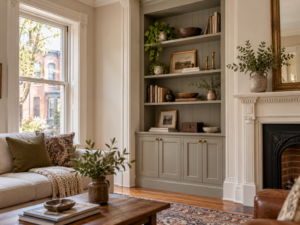
Storage is one of the most persistent challenges in Philadelphia row-homes.
Many older homes were designed before today’s expectations for wardrobes, home offices, entertainment equipment, pantry storage, and everyday household organization. Rooms may be long and narrow, closets shallow, walls irregular, and circulation space limited.
Adding freestanding furniture can solve one problem while creating another: a large cabinet may provide storage but make a narrow room feel even smaller.
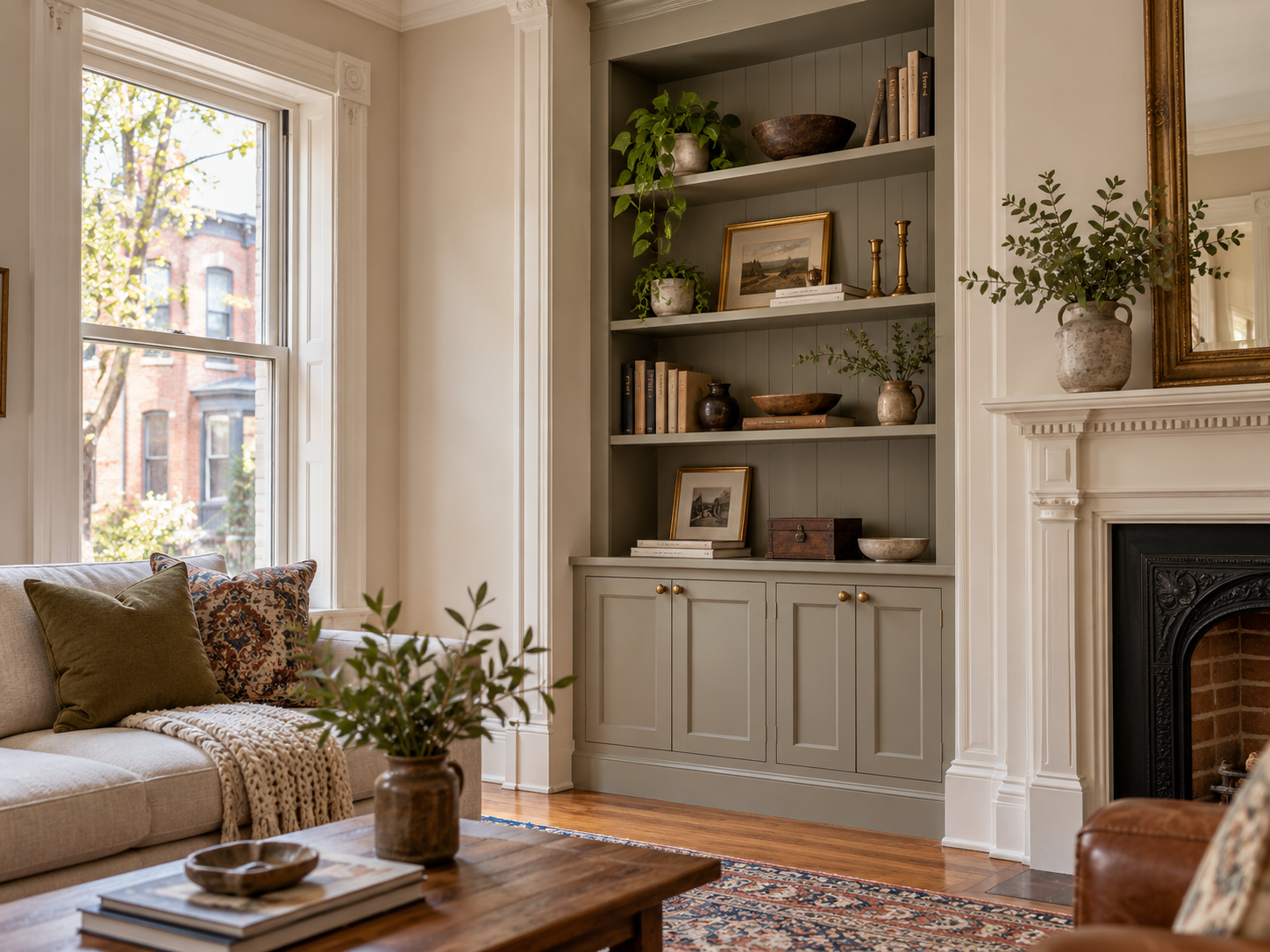
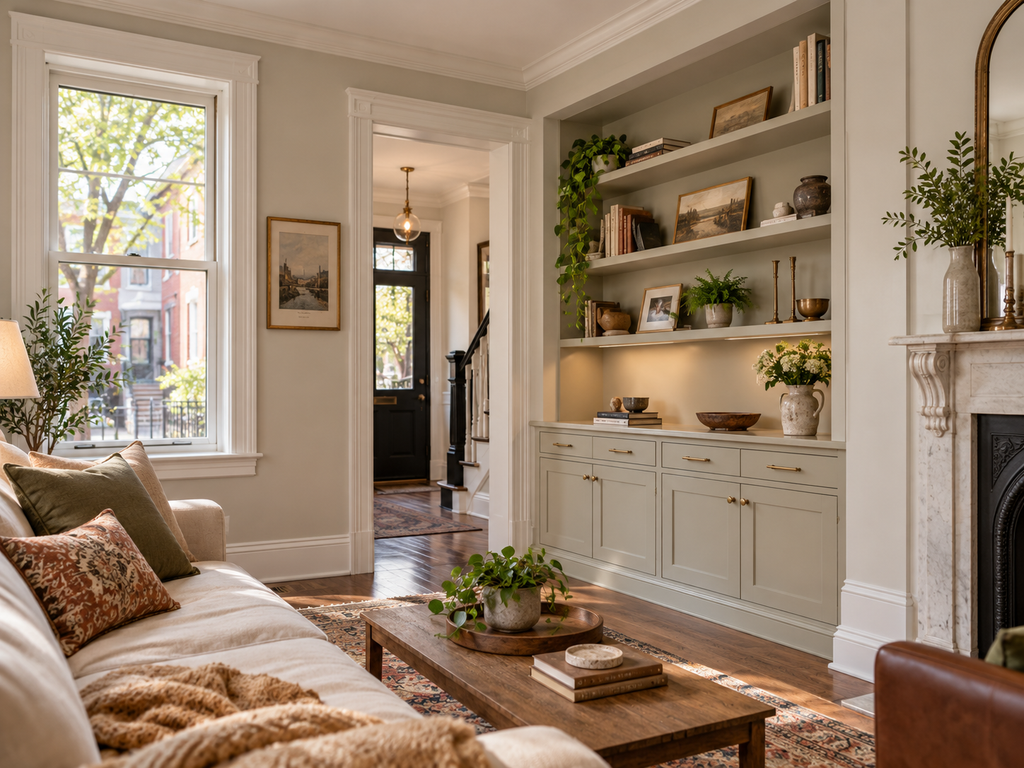
Well-planned built-in storage takes a different approach. Instead of placing storage in front of the architecture, it uses the architecture itself.
Start With the Spaces the House Is Already Giving You
Philadelphia row-homes frequently contain opportunities that are easy to overlook.
Shallow alcoves beside chimney breasts, wall recesses near stairways, dead space beneath windows, awkward corners, and underused dining-room walls can sometimes become functional storage.
The goal is not to fill every available wall with cabinetry. The goal is to identify spaces where storage can be added without disrupting the room’s circulation.
A successful built-in should feel intentional rather than inserted afterward.
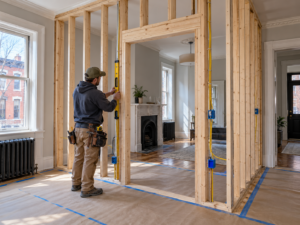
PHS General Contractor’s interior remodeling services can incorporate storage improvements into a larger room renovation so cabinetry, flooring, walls, electrical work, and finishes are coordinated together.
Measure the Room, Not Just the Cabinet
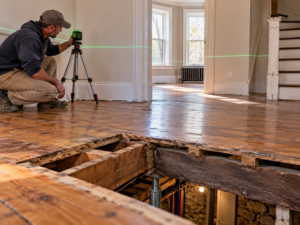
In an older house, straight drawings do not always meet straight walls.
Plaster surfaces may bow slightly. Floors can vary. Corners may not be exactly 90 degrees. Baseboards and window trim may have profiles that are difficult to reproduce.
That makes field measurement especially important.
Built-ins often need scribes, fillers, trim adjustments, or custom face-frame details to transition cleanly into existing walls.
The installation should also respect doors, radiators, receptacles, return-air paths, and window operation.
A cabinet that looks perfect on a rendering can become frustrating if a nearby door can no longer open completely.
Decide What the Storage Actually Needs to Do
The interior configuration should follow the objects being stored.
A living-room built-in may require closed lower cabinets for games and household items, adjustable shelving for books, and concealed routing for electronics.
A dining-room wall may benefit from deeper lower cabinets for serving pieces with shallower upper storage.
A bedroom built-in may combine hanging storage, drawers, shelves, and a small work surface.
Defining the purpose first prevents the common mistake of building attractive cabinetry that does not fit the homeowner’s actual belongings.
Think About Depth Carefully in Narrow Rooms
Depth is one of the most important design decisions in a Philadelphia row-home.
Standard cabinet depths can project too far into narrow circulation zones. In some spaces, reducing depth by several inches can preserve movement while still creating useful storage.
Open shelves can sometimes remain shallower than closed base cabinets. A combination of depths can make a large built-in appear lighter.
Proportion matters just as much as capacity.
Coordinate Electrical Before the Cabinetry Is Installed
Built-ins frequently intersect with electrical components.
A wall selected for cabinetry may already contain receptacles, switches, cable connections, or heating controls. New lighting may also be desired inside shelves or display areas.
These conditions should be addressed before cabinets are permanently installed.
Electrical components generally should not be buried where they become inaccessible. A remodeling plan can coordinate required changes with qualified trades before finish carpentry begins.
Respect Historic Materials
In an older Philadelphia home, built-ins often look best when they relate to existing architectural details rather than competing with them.
That may mean aligning new cabinetry with original baseboard heights, matching simple casing proportions, or selecting a painted finish that works with existing millwork.
The goal does not have to be a perfect historical reproduction. A contemporary built-in can work beautifully in an older row-home when its proportions respect the room.
If construction will disturb painted surfaces in a pre-1978 home, homeowners should also be aware of the EPA’s Renovation, Repair and Painting requirements.
Built-In Storage Can Be Part of a Larger Remodel
Storage is often most effective when planned alongside other improvements.
For example, a living-room renovation might combine wall repairs, new flooring, painting, lighting, and built-in cabinetry. Coordinating the work together helps avoid installing new storage only to remove portions later for electrical or finish work.
FAQ
Can built-ins make a small row-home feel smaller?
They can if they are too deep or visually heavy. Proper scale, color, depth, and placement help storage feel integrated rather than intrusive.
Should built-ins go all the way to the ceiling?
Not always. Full-height cabinetry maximizes capacity, while lower or partially open designs may make a narrow room feel more spacious.
Can a built-in be installed on an uneven wall?
Yes, but field fitting, fillers, scribes, and trim work may be required.
Should electrical outlets be moved first?
Any conflicts should be identified before cabinetry is installed so electrical work can remain safe and accessible.
PHS General Contractor can help incorporate functional storage into a broader Philadelphia interior renovation while coordinating cabinetry with the room’s existing architecture and finishes.