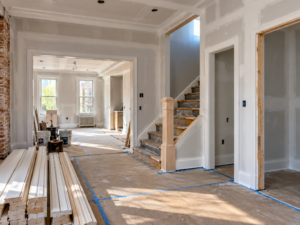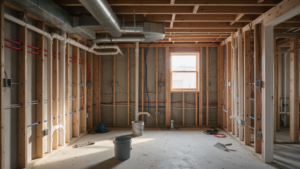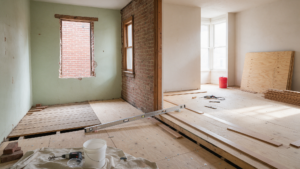
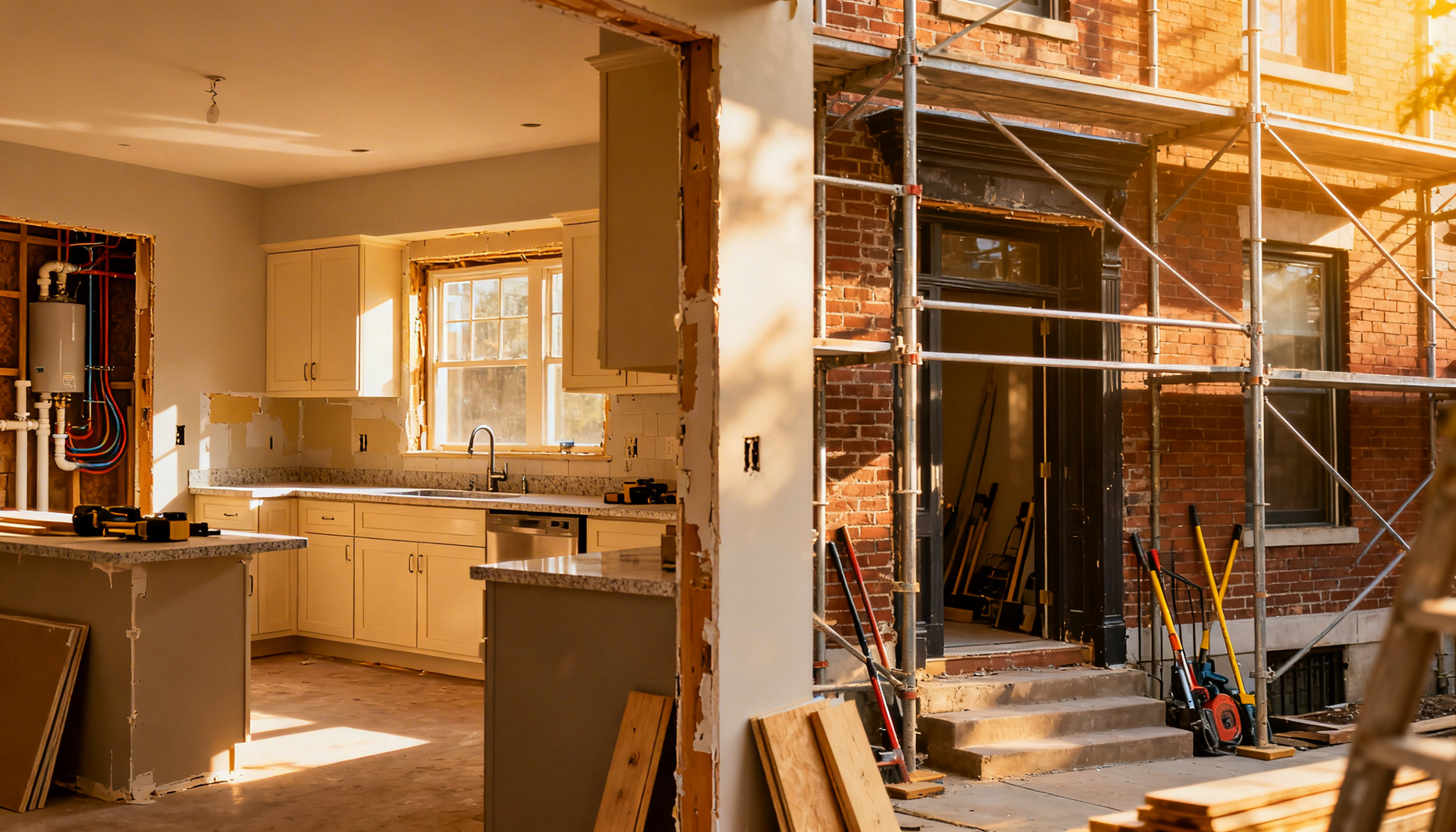
When people think about a home renovation in Philadelphia, they often picture the exciting part first: new finishes, fresh paint, updated floors, and rooms that finally look modern. However, the success of a renovation usually depends on the parts that happen before those finishes go in. Drywall condition, framing accuracy, surface prep, room transitions, and layout decisions all shape the final result. If those parts are overlooked, even an expensive renovation can feel unfinished.
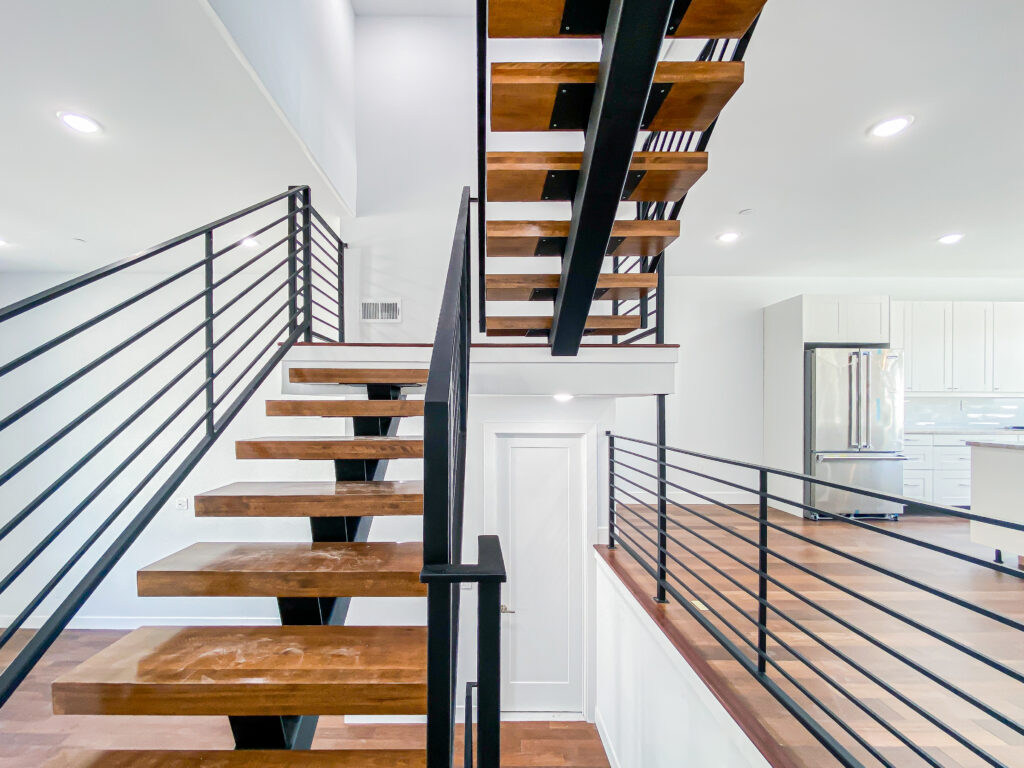
That is especially true in Philadelphia homes. Many city properties have layers of older repairs, uneven walls, patched ceilings, settling cracks, and trim lines that no longer align cleanly. In some homes, the issue is not that the finishes are old. The issue is that the surfaces underneath them are already compromised. A fresh coat of paint or a new floor will not hide poor wall condition, framing movement, or awkward layout choices. In fact, those new finishes often make the flaws stand out more.
This is why a strong general contractor approach matters. A renovation should start by addressing the structure and surfaces that support everything else. Drywall repairs, framing corrections, wall prep, trim replacement, and room-by-room consistency all affect how polished the home feels when the project is complete. Even a smaller renovation can benefit from that mindset. If a hallway, bedroom, living room, or entry area feels disconnected from the rest of the home, correcting those details can improve the entire experience of the space.
Layout also plays a major role in home renovation. A room can be updated beautifully and still feel inconvenient if the traffic flow is poor or the function has not improved. Sometimes the best renovation move is not adding more. It is simplifying the space, improving transitions, and making the home easier to use. In Philadelphia rowhomes, where every square foot matters, those changes can have a huge impact.
Another reason homeowners should pay attention to drywall and finish work is lighting. Natural daylight and overhead fixtures reveal every inconsistency. Poorly repaired seams, rough sanding, uneven corners, and misaligned trim become obvious once a room is painted and furnished. That is why prep work is not just technical. It is visual. It directly affects how clean, straight, and finished the space appears.
If you are planning a renovation, it helps to think beyond surface upgrades alone. Ask whether the walls are ready. Ask whether the flow works. Ask whether the framing and finish details will support the look you want at the end. A successful general contractor project in Philadelphia is built on these fundamentals. When the underlying work is done right, the finished home feels better, looks cleaner, and holds up longer.