
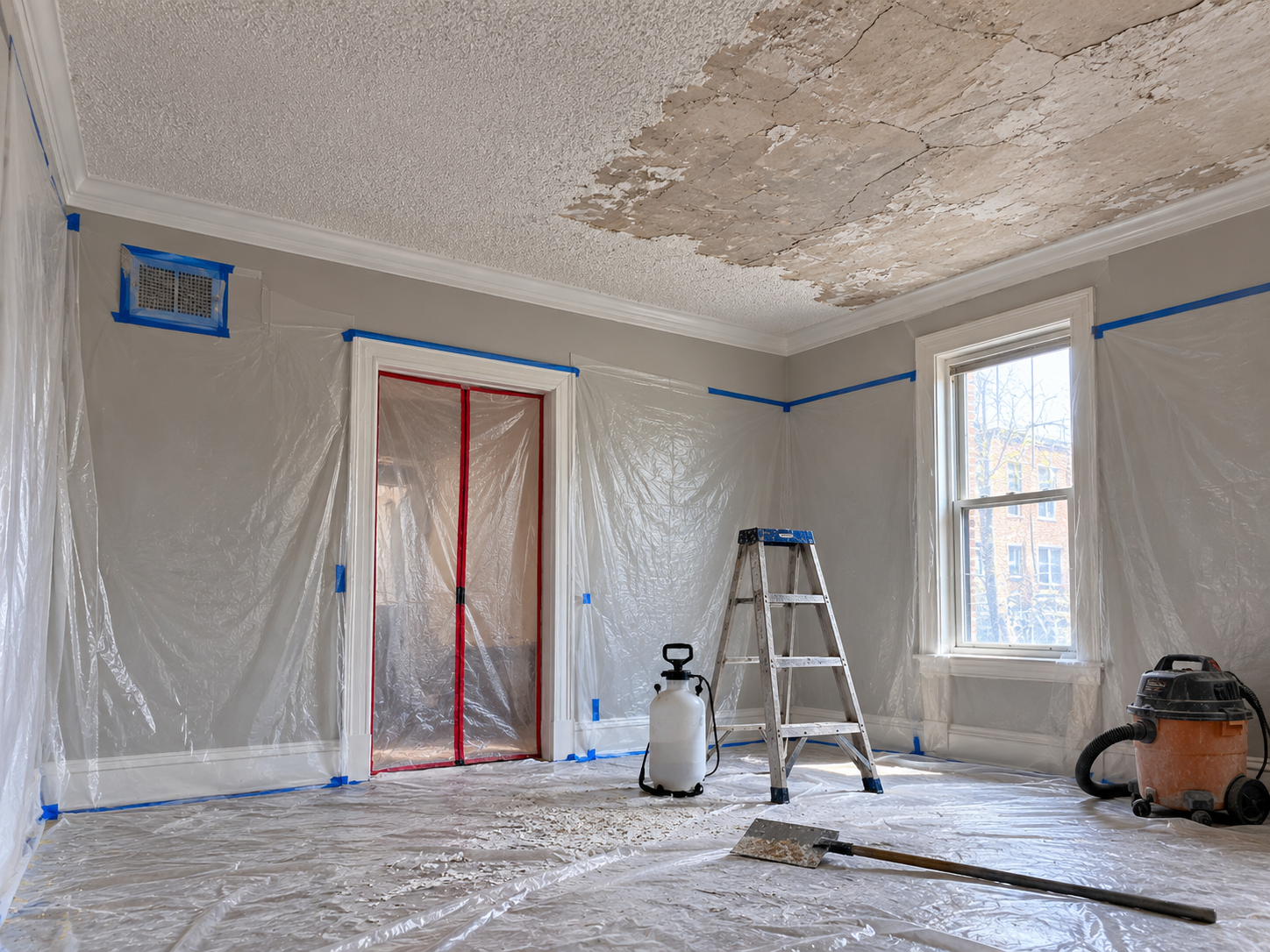
Popcorn ceilings, also called acoustic or cottage cheese ceilings, show up all over Philadelphia. You find them in Northeast Philadelphia twins, in South Philadelphia and Fishtown rowhomes that were updated decades ago, and in Germantown, Mount Airy and Roxborough houses where a previous owner sprayed texture over cracked plaster rather than repairing it. The texture hides flaws, but it traps dust, yellows and makes a renovated room feel dated.
The catch is that you cannot tell what is in that texture by looking at it, and in an older home what sits underneath is often original plaster with its own problems. This guide explains why testing comes first, what happens if the result is positive, how removal compares with skim coating or covering the ceiling with drywall, and how to keep dust contained in a narrow, occupied rowhome.
Why You Test Before You Touch It
Some acoustic ceiling products made in past decades contained asbestos, and many Philadelphia homes had their texture applied long before anyone kept records. The age of the house, the look of the texture or a previous owner’s assurance is not proof either way. According to the EPA’s guidance on protecting your family from asbestos exposure, you generally cannot tell whether a material contains asbestos simply by looking at it, unless it is labeled, and having your home inspected makes sense when you are planning to remodel, because remodeling can disturb building materials.
The same EPA page makes a few points every homeowner should know before picking up a scraper:
- Do not sample it yourself. EPA recommends that a trained and accredited asbestos professional take samples, and notes that sampling done incorrectly can be more hazardous than leaving the material alone.
- Undisturbed material is a lower concern. Asbestos-containing material in good condition that will not be disturbed is generally best left alone.
- Disturbance is the problem. Fibers may be released when material is cut, sanded, scraped, drilled or removed improperly, which is exactly what popcorn removal involves.
In practice, the first step is a test by a qualified asbestos inspector, with samples sent to a lab, before any scraping, sanding or drilling.
If the Test Comes Back Positive
A positive result is not a reason to panic, but it changes who does the work. EPA explains that removal is complex and must be done only by a trained and accredited asbestos professional, and that improper removal can actually increase your family’s exposure. The agency also notes that some states and localities require training and accreditation for this work even in single-family homes.
Here is how we handle it at PHS:
- We do not perform asbestos abatement ourselves. If your ceiling tests positive, we refer you to a licensed abatement contractor and coordinate our schedule around theirs.
- Abatement happens first. The abatement contractor seals off the work area, removes the material following their own procedures, and cleans up before our crew returns.
- Clearance before finishes. EPA notes that an inspector or independent air testing contractor may check the air after the work is complete. Ask your abatement contractor about clearance testing and written documentation.
- Then we rebuild. Once the space is cleared, we repair the ceiling, skim coat or install drywall, prime and paint.
EPA also suggests using a different firm for the inspection than for the removal, to avoid a conflict of interest, and getting a written contract that spells out the work plan, cleanup and the federal, state and local rules the contractor must follow. Philadelphia has its own local asbestos requirements, so confirm notifications and permits with your abatement contractor and the City before work starts.
If the Test Comes Back Negative
A negative result opens up three practical paths. Each has trade-offs in mess, cost, schedule and final appearance.
- Scrape and refinish. The texture is misted with water to soften it, scraped off, and the ceiling is patched, skimmed where needed, primed and painted. This keeps the original ceiling height and is often the best choice when the surface underneath is sound. It is also the messiest option.
- Skim coat over the texture. On some ceilings, the texture can be knocked down and joint compound applied in thin coats to create a smooth surface. Results depend heavily on how well the texture is bonded and whether it has been painted.
- Cover with new drywall. Thin drywall can be fastened through the texture into the framing above, creating a new flat ceiling without removing the old material. This produces less dust and is useful when the ceiling below is badly cracked or uneven.
Painted texture deserves special mention. Once popcorn has been painted, water does not soak in easily and scraping becomes slow and rough on the surface below. In those cases, covering or a heavier skim may be more practical than fighting the paint.
What You Will Find Underneath in an Older Home
In a modern house, popcorn usually sits on drywall. In much of Philadelphia’s older housing stock, it often sits on original plaster and wood lath, and that changes the job. Texture was frequently sprayed on to hide what was already wrong, so removing it can reveal:
- Hairline and map cracking across older plaster ceilings.
- Loose or sagging plaster where the keys behind the lath have broken.
- Old water stains from past roof leaks, radiator lines or a bathroom above.
- Patch work from earlier repairs that sits higher or lower than the surrounding ceiling.
- Layers of old paint, which in a home built before 1978 may contain lead.
Sound plaster with minor cracks can usually be repaired and skimmed. Plaster that sags or moves when pressed needs to be reattached, or covered or replaced, before any smooth finish goes on, or the cracks will come back. If the old paint layers may contain lead, ask your contractor how they will test for it and follow lead-safe work practices, since scraping and sanding painted surfaces creates the same kind of dust concern.
A good plan includes a contingency for what the plaster turns out to be.
Removal vs. Skim Coat vs. Drywall: How to Decide
There is no single right answer for every room. These questions usually point toward the best option:
- What did the test say? A positive result means licensed abatement or a strategy recommended by the asbestos professional, not a DIY decision.
- Is the texture painted? Painted popcorn often favors covering or skimming.
- How is the plaster underneath? Sound plaster favors removal and refinishing. Cracked, sagging or uneven plaster often favors drywall over it, after loose areas are secured.
- How much ceiling height do you have? Many rowhomes have generous ceilings, but in basements, low second floors or under a flat roof, every bit of height counts.
- What else is happening in the room? If you are adding recessed lights, moving a fixture, running new wiring or fixing a leak from above, opening the ceiling may be smarter than refinishing it.
Dust Control in a Philadelphia Rowhome
Even with a negative asbestos result, popcorn removal is one of the dustiest interior jobs there is. In a narrow rowhome with one staircase and open floor-to-floor circulation, dust travels quickly. A careful crew will typically:
- Clear and protect the room. Furniture is moved out where possible, floors are covered, and walls are draped in plastic.
- Seal openings. Doorways get zippered plastic barriers, and HVAC registers and returns are covered so dust does not move through ductwork.
- Shut down air movement. Heating and cooling serving the work area are turned off during removal, and windows are managed so wind does not blow debris back inside.
- Wet the material. Misting softens the texture and keeps it from becoming airborne.
- Clean with HEPA vacuums and damp wiping, not a household vacuum or dry sweeping.
- Bag debris as you go so material is not tracked through the house.
If you live in the home during the work, plan to stay out of the room and keep children and pets away until cleanup is done.
Frequently Asked Questions
Can I test my popcorn ceiling for asbestos myself? EPA does not recommend taking samples yourself, because sampling done incorrectly can release fibers. Hire a trained and accredited asbestos inspector to collect samples for lab analysis.
Does PHS remove asbestos popcorn ceilings? No. We do not perform asbestos abatement. If your ceiling tests positive, we refer you to a licensed abatement contractor and handle the repair, drywall and finish work after the area is cleared.
Is it cheaper to cover a popcorn ceiling than to remove it? Sometimes. Covering avoids much of the cleanup and patching, but adds material and labor for new drywall. The condition of the plaster, paint on the texture and the room layout all affect the comparison.
Can I just paint over popcorn ceiling texture? Painting does not remove the texture or any asbestos it may contain, and it makes future removal harder. It is worth testing and deciding on a long-term plan first.
Will removing popcorn damage my plaster ceiling? Scraping can expose cracks, loose areas and old patches that the texture was hiding. That is normal in older homes, and those issues should be repaired before the final finish goes on.
PHS General Contractor Philadelphia handles interior renovation work, including ceiling repair, skim coating, drywall installation and painting, for homeowners in Center City, South Philadelphia, Fishtown, Fairmount and Brewerytown, Germantown and Mount Airy, Roxborough and Manayunk, Northeast and West Philadelphia, and nearby Montgomery County communities such as Lower Merion, Abington and Plymouth Meeting. We do not test for or remove asbestos ourselves, so please arrange testing first, and if your ceiling tests negative or has been cleared by a licensed abatement contractor, explore our home remodeling and renovation services and contact us to plan the finish work.