
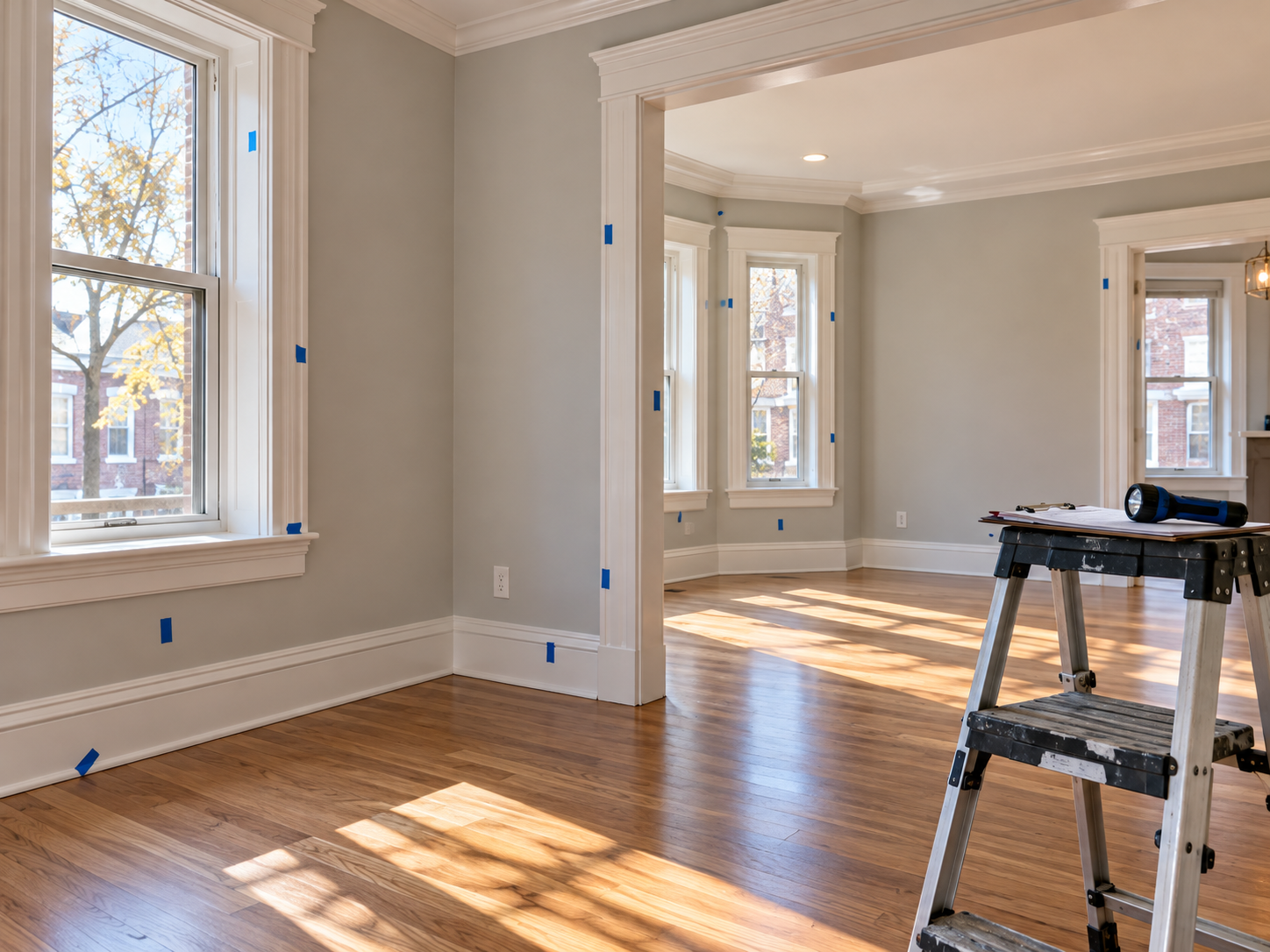
The last few days of a renovation can feel like a blur. Painters are finishing touch-ups, the electrician is installing cover plates, and the dumpster is being hauled away. It is also the most important moment to slow down. The final walkthrough and punch list are your chance to confirm the work matches the contract before the project closes out.
This guide explains how a punch list works, what to check room by room in an older Philadelphia home, which documents to collect, and how Pennsylvania’s home improvement law shapes the contract you are closing out.
What a Punch List Is
A punch list is a written list of items that are not finished, not working, or not done to the agreed standard at the end of a project. It is normal. Even well-run renovations have punch items: a door that sticks, a paint drip, a missing outlet cover.
A good punch list process has three parts:
1. A walkthrough with the homeowner and the contractor’s project lead, when the work is substantially complete.
2. A written list with each item, its location and what needs to be done.
3. A follow-up walkthrough to confirm each item has been completed.
When to Do the Walkthrough
Schedule the walkthrough when the work is substantially complete, after cleaning, and in good light. Daylight shows paint and drywall flaws that are invisible at night. Bring:
•A copy of your contract and any written change orders.
•Painter’s tape or sticky notes to mark items.
•A phone to take photos.
•A small lamp or flashlight to check walls at a low angle.
Room-by-Room Checklist
Walls, ceilings and paint
•Look along walls with a light held close to the surface to spot ridges, nail pops and patches.
•Check where new drywall meets old plaster. Transitions are common punch items in older homes.
•Look for paint on trim, hardware, outlets and floors.
•Confirm colors and sheens match the selections.
Trim, doors and hardware
•Open and close every door. Doors should latch without force and not rub the frame.
•Check gaps around doors and trim for uneven spacing.
•Confirm caulking at trim joints is complete.
•Test locks and hinges.
Floors
•Walk every room listening for squeaks or soft spots.
•Check transitions between rooms and flooring types for height differences and secure thresholds.
•Look for scratches or dents from the final phase of work.
•Confirm baseboard and shoe molding are installed and painted.
Kitchens and bathrooms
•Run every faucet, hot and cold, and look under the sink for drips.
•Flush every toilet and check around the base.
•Run the shower and check for leaks at the valve and door.
•Open every cabinet door and drawer; check alignment and soft-close function.
•Check grout and caulk for gaps.
•Confirm appliances are installed and operating.
Electrical
•Test every switch and outlet.
•Press the test and reset buttons on GFCI outlets in kitchens, bathrooms and other required locations.
•Confirm all cover plates are installed and straight.
•Check that light fixtures, exhaust fans and smoke and carbon monoxide alarms work.
Heating, cooling and ventilation
•Confirm the system runs and that registers or radiators in renovated rooms deliver heat.
•Check that bathroom and kitchen exhaust fans vent outdoors.
Windows and exterior
•Open and lock any new or repaired windows.
•Check exterior penetrations made during the project, such as new vents, for sealing.
Cleanup
•Confirm construction debris is removed, including from the basement and yard.
•Check HVAC filters; construction dust clogs them quickly.
Documents to Collect Before Closing Out
Paperwork is part of the punch list. Ask for:
•Permit and inspection records. In Philadelphia, many renovation projects require permits from the Department of Licenses and Inspections. The City’s building permit guidance explains the permit and inspection process. Ask for confirmation that required inspections were passed and permits closed out.
•Manufacturer warranties and manuals for appliances, fixtures, windows, roofing materials and mechanical equipment.
•Paint and finish schedule listing colors, sheens and products for future touch-ups.
•Photos of open walls taken before drywall, showing the location of pipes, wires and blocking.
•Leftover materials such as spare tile, flooring and paint.
•Lien waivers from the contractor and major subcontractors and suppliers, if your contract provides for them. Ask your contractor or attorney what is appropriate for your project.
How Pennsylvania Law Shapes the Contract
Pennsylvania’s Home Improvement Consumer Protection Act (HICPA) sets requirements for home improvement contracts. According to the Pennsylvania Office of Attorney General:
•Contractors who perform $5,000 or more of home improvements per year generally must register with the Attorney General’s office, and must include their registration number in their advertisements, contracts, estimates and proposals.
•Contracts for home improvements of more than $500 must be in writing and signed by the consumer and the contractor.
•Contracts must include a description of the work, the approximate start and completion dates, the total price, and the contractor’s registration number.
The Attorney General’s guidance also describes a three-business-day right to rescind for homeowners and limits on down payments for larger projects. Consumers can check whether a contractor is registered by calling 1-888-520-6680.
For your punch list, this means the written contract and change orders are your reference point. If a scope item is not in the contract or a change order, discuss it with the contractor; if it is, the punch list should confirm it was completed.
Handling Disagreements
Most punch items are resolved without conflict. When there is a disagreement:
•Go back to the contract and the written change orders.
•Separate defects from preferences. A cracked tile is a defect; a slightly different shade than imagined may not be.
•Put open items in writing with dates for completion.
•Keep communication professional and documented.
Frequently Asked Questions
When should a punch list walkthrough happen?
When the work is substantially complete and the space has been cleaned, in good daylight, with both the homeowner and the contractor’s project lead present.
Is it normal to have a long punch list?
A list of small items is normal on any renovation. Very long lists of significant defects may point to scheduling or quality problems.
What documents should I get at the end of a renovation?
Permit and inspection records, manufacturer warranties, a paint and finish schedule, photos of open walls, and any lien waivers called for in your contract.
Does Pennsylvania require a written renovation contract?
Under HICPA, home improvement contracts over $500 must be in writing and signed by both parties, with specific required terms.
Finish the Project the Right Way
A careful final walkthrough and a written punch list protect your investment and give your contractor a clear path to finish. Combined with the right paperwork, they make it easier to maintain your home for years.
PHS General Contractor Philadelphia manages multi-room renovations in older Philadelphia homes from planning through final walkthrough. Explore our renovation services.