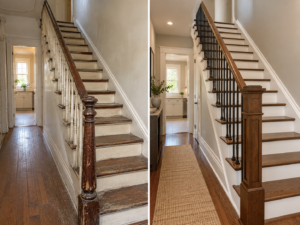

Repairing Interior Stair Treads, Risers & Landings During Philadelphia Rowhome Renovations is a focused issue that can have a major effect on the performance, safety, and long-term value of older Philadelphia homes and rowhomes. For homeowners considering interior renovation, flooring and finish carpentry, the most important first step is understanding the existing condition rather than assuming a standard detail will work everywhere. Two of the biggest factors are squeaks and loose treads and damaged risers and nosing. PHS General Contractor Philadelphia approaches this type of project by connecting the visible problem to the underlying assembly, then planning the work around the home’s layout, materials, and local construction conditions. In Philadelphia, PA, the existing building assembly, age of the home, and prior renovation history often determine which solution is appropriate.
Why the Existing Condition Matters
Why the existing condition matters should be planned around squeaks and loose treads and damaged risers and nosing. Other relevant factors include landing leveling, finish carpentry coordination. For PHS General Contractor Philadelphia, the objective is to solve the underlying construction issue while protecting the surrounding finishes and keeping the scope aligned with the homeowner’s broader renovation goals.
Planning the Repair or Remodeling Scope
Planning the repair or remodeling scope should be planned around damaged risers and nosing and landing leveling. Other relevant factors include finish carpentry coordination, squeaks and loose treads. For PHS General Contractor Philadelphia, the objective is to solve the underlying construction issue while protecting the surrounding finishes and keeping the scope aligned with the homeowner’s broader renovation goals.
Materials, Sequencing, and Coordination
Materials, sequencing, and coordination should be planned around landing leveling and finish carpentry coordination. Other relevant factors include squeaks and loose treads, damaged risers and nosing. For PHS General Contractor Philadelphia, the objective is to solve the underlying construction issue while protecting the surrounding finishes and keeping the scope aligned with the homeowner’s broader renovation goals.
Local Project Considerations
Local project planning matters because access, permitting, neighboring properties, and existing construction can change the appropriate approach. In Philadelphia, PA, contractors should coordinate the work with the trades that affect the same assembly, keep critical conditions visible until they are reviewed, and avoid closing walls or finishes before the underlying issue has been resolved. For homeowners comparing options, the best proposal should explain what is being repaired, what remains in place, what conditions could expand the scope, and how the finished work will connect to the rest of the home.
Key Planning Points
- Squeaks and loose treads
- Damaged risers and nosing
- Landing leveling
- Finish carpentry coordination
If you are planning work related to this issue, explore services with PHS General Contractor Philadelphia and schedule an evaluation based on the actual condition of your property.
Frequently Asked Questions
How do I know whether squeaks and loose treads needs professional evaluation?
If the condition is recurring, affects adjacent finishes, changes how the structure or system performs, or has an unclear cause, an on-site evaluation is usually the most efficient next step. The goal is to identify the source before committing to a repair.
Can this issue be handled as a small repair?
Sometimes. A localized repair may be appropriate when the surrounding assembly is sound and the cause is limited. If inspection reveals deterioration, movement, moisture, or previous improper work beyond the visible area, the scope may need to expand.
What should homeowners ask before approving the work?
Ask what conditions were inspected, what remains uncertain, which materials or systems are proposed, how nearby finishes will be protected, and whether permits, manufacturer requirements, or specialist review apply to the project.
National Association of the Remodeling Industry — https://www.nari.org/