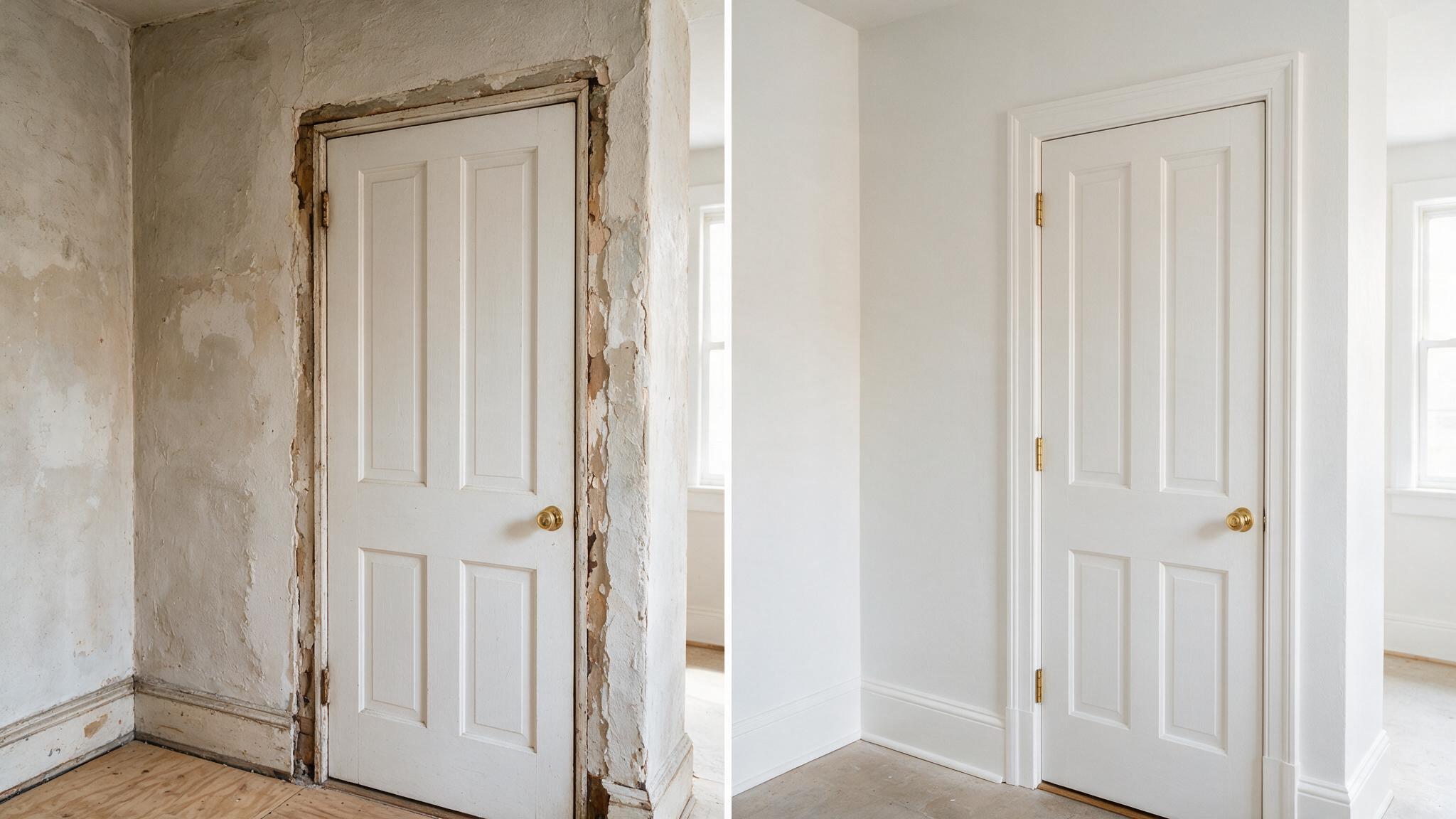
Projects involving baseboard trim repair Philadelphia often look simple in finished photos, but the difficult decisions happen earlier. In Graduate Hospital, field measurements, hidden conditions, trade coordination, and long-term serviceability all influence the final scope. Older walls are rarely perfectly straight, and installing rigid trim without reading those irregularities can create visible gaps, open miters, and wavy shadow lines.
Coordinate the Hidden Details
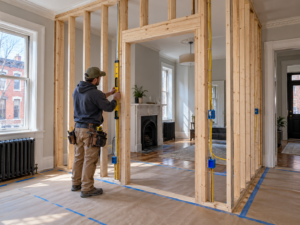
Good finish carpentry starts with deciding which surfaces will be corrected and which conditions should be scribed, shimmed, or blended into the existing room. Before pricing or demolition is finalized, document dimensions, access, adjacent conditions, and any signs that the existing work has already been altered. That gives the contractor a reliable baseline and helps separate a focused repair from a scope that needs broader correction. In older Philadelphia-area and South Jersey properties, this step is especially important because previous work may not match current products, drawings, or assumptions.
Resolve the Technical Conflicts Early
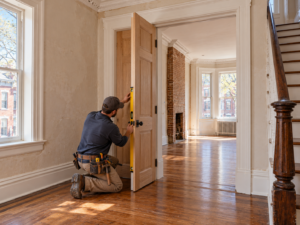
Door casing needs to account for jamb depth, plaster thickness, floor level, and reveal consistency before the first piece is cut. Small conflicts become expensive when one trade covers another trade’s work or when a finish is fabricated before rough dimensions are verified. The project plan should therefore identify who owns each transition, what must remain accessible, and which decisions depend on field measurements. Material selections should follow those constraints rather than forcing the building to fit a product that was chosen too early.
Connect the Trades Before Closing the Work
Baseboards should coordinate with floor transitions, radiator or pipe penetrations, door blocks, and paint sequencing so the room reads as one finished system. Durability comes from solving the cause, building the layers in the correct order, and leaving the finished system maintainable. Homeowners in Graduate Hospital should be cautious of a cosmetic fix when movement, moisture, structural weakness, or service access suggests a deeper condition. The right scope may be localized, but that decision should follow inspection rather than guesswork.
What This Means for Local Property Owners
For someone comparing options for baseboard trim repair Philadelphia, the useful question is not simply which product looks best. The stronger question is which scope fits the actual property, protects the surrounding work, and can be serviced later without unnecessary demolition. Related searches such as door casing replacement Philadelphia and finish carpentry old rowhome often point to the same need: accurate diagnosis first, then a coordinated plan that matches the building and the intended use.
Frequently Asked Questions
Can old baseboards be reused?
Sometimes, especially when they are stable and architecturally valuable, but damaged sections may be difficult to match perfectly.
What does scribing trim mean?
It means shaping the back or edge of a trim piece to follow an irregular wall or floor while keeping the visible face aligned.
Should trim be installed before or after flooring?
The best sequence depends on flooring type and scope, but the relationship should be decided before either trade finishes its work.
Plan the Next Step
If you are planning baseboard trim repair Philadelphia in Graduate Hospital, PHS General Contractor Philadelphia can help evaluate the existing conditions, define a practical scope, and coordinate the work around long-term performance. Learn more about Services at https://phsgeneralcontractorphiladelphia.com/services/ and schedule a project consultation before materials, demolition, or finish selections are finalized.
Helpful homeowner resource: U.S. EPA – Renovation, Repair and Painting Program