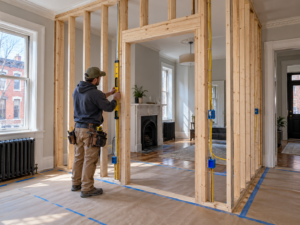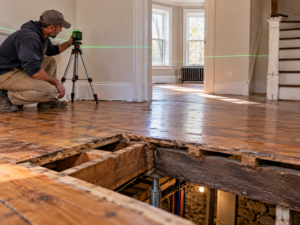
If you manage a home in Fairmount, Brewerytown, Germantown, Mt. Airy, Roxborough, or West Philly, you’ve seen it: a “small” issue becomes a bigger problem because someone treated symptoms instead of causes.
A stain is painted over. A crack is patched. A floor is refinished. Then the issue comes back—because the real problem was moisture, ventilation, or a slow leak.
A repair-first approach is how you protect budgets and create renovations that actually last.
The repair-first hierarchy (the order that prevents repeat damage)
1) Stop moisture
- roof leaks, plumbing drips, window/door infiltration
- bathroom ventilation issues
- basement humidity and condensation patterns
2) Dry and stabilize
- dehumidification
- removing wet materials when needed
- ensuring framing and substrate are dry enough for repair
3) Rebuild the surface
- drywall replacement/patching
- trim carpentry
- flooring repairs
4) Finish the room
- paint, tile, fixtures, hardware
Why this matters in Philly homes
Rowhomes and older properties often have:
- shared walls and tight cavities that hide water travel
- older vents and insufficient exhaust in baths
- layered renovations (old + new materials) that respond differently to moisture
Mold + moisture: what homeowners should know
The EPA guidance is clear: the key to controlling mold is controlling moisture, cleaning hard surfaces properly, and addressing leaks quickly.
If porous materials become moldy, they can be difficult to fully clean and may require removal depending on severity.
Repair-first “inspection points” (what we look for)
- where the water starts vs. where it shows up
- roof transitions, plumbing penetrations, bathroom exhaust paths
- interior staining patterns (edges, corners, ceiling lines)
- recurring drywall cracks (movement vs. moisture vs. poor tape)
- Home: https://phsgeneralcontractorphiladelphia.com/
- About: https://phsgeneralcontractorphiladelphia.com/about-us/
- EPA Mold Cleanup guidance