
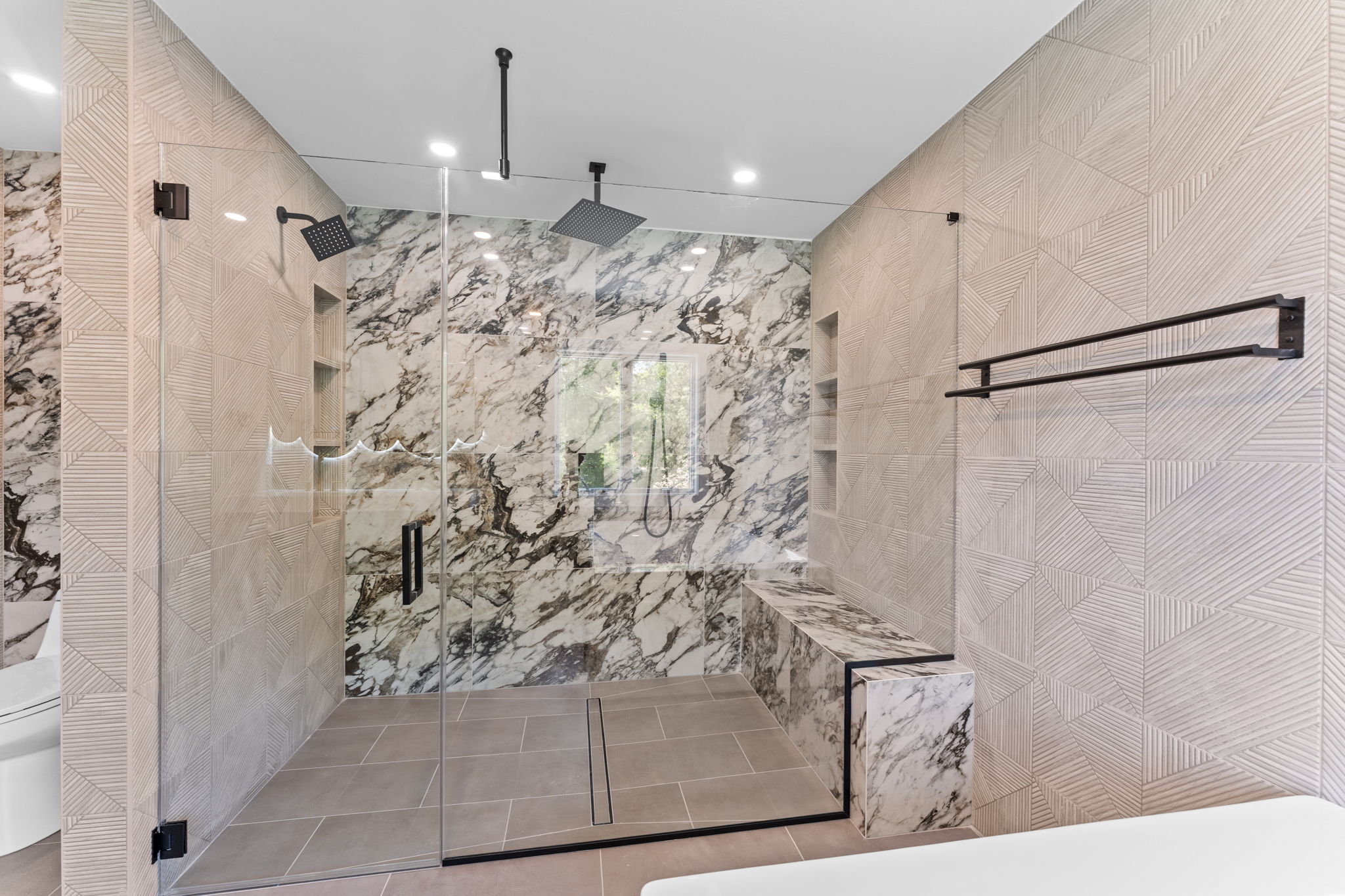
Stopping the leak is only the first half of a bathroom repair. Wet insulation, softened drywall, damaged backer, and finish materials still need to be evaluated before the opening disappears.
Start With the Existing Condition
Center City and Graduate Hospital bathrooms often pack plumbing, ventilation, electrical devices, niches, and storage into tight wall cavities, so a small opening may cross several assemblies.
How the Building Type Changes the Plan
After the source is repaired, inspect framing, insulation, backing, nearby fasteners, and the extent of staining. The cavity should be dry enough for reconstruction before it is closed.
The Details to Resolve Early
Painted drywall and wet-area tile need different repair assemblies. If shower tile is removed, the patch boundary should allow waterproofing continuity rather than leaving a fragile strip beside the opening.
What Separates a Patch From a Durable Result
Where valves, cleanouts, or serviceable connections remain, consider an access strategy so future maintenance does not require destructive finish removal.
Frequently Asked Questions
How long should a wet wall stay open?
Drying time depends on the amount of moisture, materials, airflow, and conditions; the assembly should be dry enough before reconstruction.
Can one damaged shower tile be replaced after a leak?
Sometimes, but waterproofing continuity and backing condition matter more than the number of visible tiles.
Should wet insulation be reused?
It depends on material, contamination, and whether it can be dried properly; damaged material may need replacement.
Plan the Next Step
PHS can coordinate plumbing-access repairs, drywall, backing, tile transitions, trim, and painting after a bathroom leak.
Helpful source: U.S. EPA – Mold and Moisture